
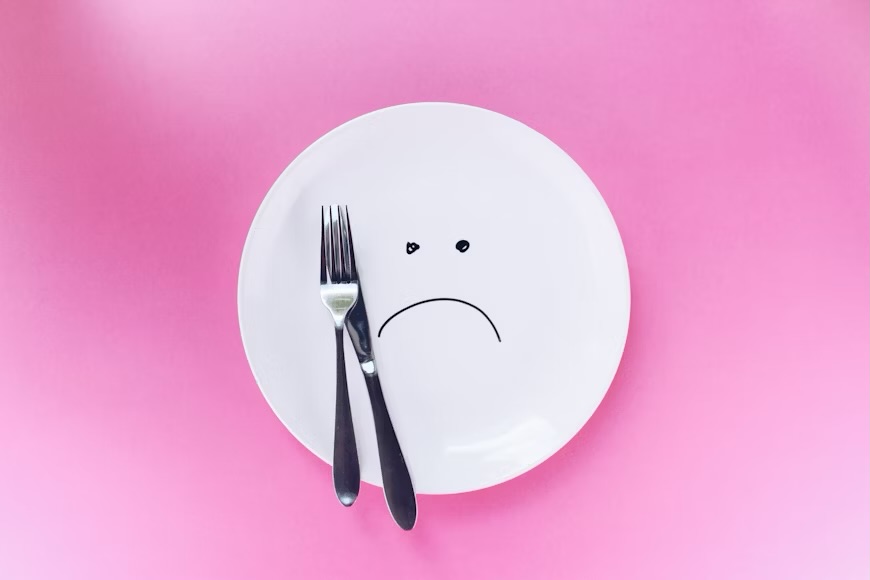
There are chapters in my life that food has written for me.
Some tasted like survival.
Some like shame.
Some like joy—soft, greasy, and hot from the pan.
Before I ever labeled it emotional eating, before I even knew what healing looked like, food was more than a meal. It was a moment. A feeling. A kind of safety I didn’t often get.
When everything else was unstable, food wasn’t consistent either—and maybe that’s what hurt the most. So when food was available, I clung to it. Not just for nourishment, but for comfort. For control. For a sense of emotional safety I couldn’t find anywhere else.
How Childhood Trauma Shaped My Relationship with Food

Anthony McKissic /Unsplash
When I was growing up, living with my mom,
there were days—sometimes nights—when she’d be gone for long stretches. I was the oldest of three, and that meant stepping into a role I never asked for. I remember knocking on neighbors’ doors, not just hungry, but carrying the weight of making sure my sister and brother had something—anything—to eat.
That’s when food became responsibility.
That’s when hunger became fear.
That’s when I learned how to provide before I ever learned how to receive.
Later, I went to live with my grandmother. Her house was packed with cousins, routines, and a whole lot of limitations. She was on a strict budget, and if you didn’t eat what she cooked, you didn’t eat at all. There was no room for preference or second helpings. So I learned to sneak food.
That’s when food became secret.
Hidden.
Tied to shame.
The Taste of Freedom: Emotional Eating as Escape

Later, when I moved in with my aunt, things shifted.
I had access to all sorts of good eating—whether it was a hot sausage sandwich from the corner store on Galvez and Tupelo or a Big Mac from McDonald’s. I was free to eat what I wanted. No questions. No rules. No shame. And while it might sound small to someone else, for me, that freedom tasted like liberation.
Food no longer felt like rationing.
It wasn’t measured or withheld.
It was simply there.
And that’s when I realized:
All of my good memories were wrapped in food.
And all the worst ones—evictions, silence, hunger—were wrapped in scarcity.
So I didn’t just eat to feed my body.
I ate to feel free.
I ate to feel emotionally full.
From Revenge to Revelation: How Fasting Evolved

The first time I fasted, I didn’t even call it a fast.
I was doing the Master Cleanse—lemons, cayenne, maple syrup—the whole thing.
At the time, I was coming out of a situationship that never went anywhere serious. And deep down, I believed his rejection had something to do with how I looked. My weight. My body.
So I fasted out of revenge.
To prove something.
To reset my body and become “that girl” he might regret losing.
That fast wasn’t spiritual.
It was emotional.
It was personal.
It was pain dressed up as discipline.
But something shifted as I got older.
Life got louder. I was emotionally overwhelmed, physically tired, and spiritually disconnected. Once again, I found myself using food as a blanket to muffle what I couldn’t process. But this time, when I turned to fasting, it wasn’t to shrink my body.
It was to hear myself again.
Fasting stripped away the noise and made me sit with my emotions.
And the silence that followed?
It wasn’t peaceful. It was confronting.
I came face-to-face with every memory I’d buried in my belly.
The fear of going to bed hungry.
The shame of sneaking bites in the dark.
The grief of waiting for my mama to come home, hoping she’d bring food and a little bit of peace.
Fasting didn’t heal me overnight.
But it revealed what I needed to heal.
Relearning Nourishment Without Shame

Now, I’m learning to nourish myself in ways that don’t involve punishment or hiding.
Not through restriction.
Not through overeating.
Not through shame or silence.
But through truth.
I’m redefining what it means to feel full—not just physically, but emotionally.
I’m learning that food can be joyful, not reactive.
That I don’t have to sneak meals or binge in secret.
That I don’t have to fast as a form of punishment, but as a path to clarity when my soul needs quiet.
And I’m doing this alongside my son.
Together, we’re learning what emotional safety feels like—not just through food, but in our home, in our bodies, in the spaces where we rest.
This is the nourishment I never had growing up.
And now, I get to become the woman who gives it back—to myself, and to him.
Your Turn in the Circle

If you’ve ever eaten to escape, to soothe, or to survive—this space is for you.
Leave a comment below and share your story. What role has food played in your emotional journey? What are you learning—or unlearning—about nourishment?
Subscribe to The Circle of Becoming for more real stories, healing reflections, and journal prompts to help you reconnect to your emotional safety and rebuild your relationship with food.
✍🏾Want to share your voice with the community? Submit a guest post. Your story matters here.
Let’s keep becoming, together.
Leave a Reply